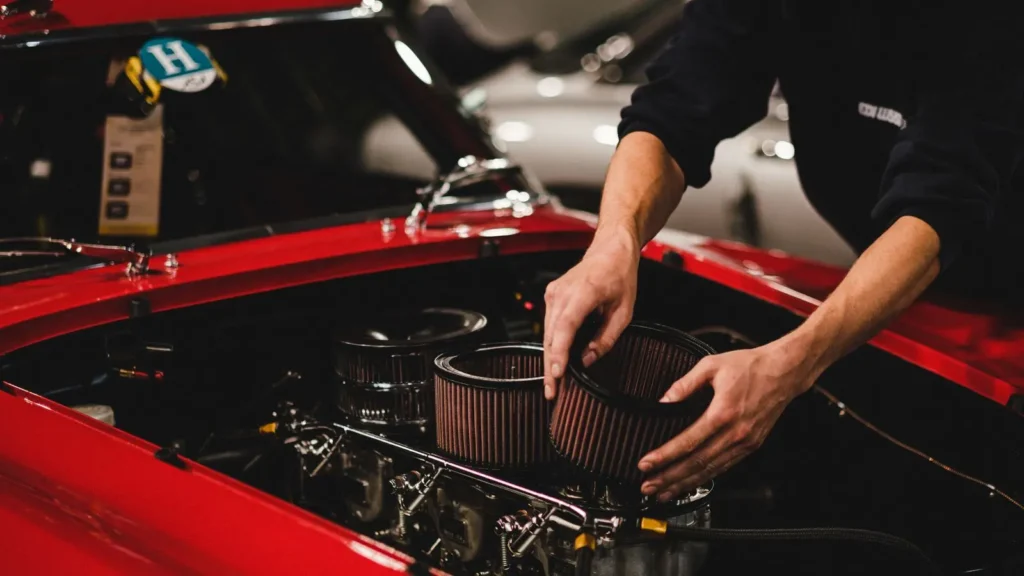
Most K&N air filters are cleaned every 75,000 km, and more often in dusty conditions. Under the official K&N instructions the cleaner is sprayed on both sides and left for 10 minutes, the filter is rinsed with cool, low-pressure water from the clean side out and left to dry naturally. Then oil is applied along the crown of each pleat from about 8 cm and left to wick in for 20 minutes.
What is a K&N filter and how does it differ from a paper one?
A K&N is an air filter with a multi-layer cotton filter element that is cleaned and reused. A paper filter is replaced with a new one, while a K&N is washed and re-oiled.
The filter is oiled, which is why it is red. The K&N instructions require the filter to be re-oiled after every cleaning. If you have no time for maintenance every few tens of thousands of kilometres, a paper filter is the simpler choice.
How many kilometres between K&N filter cleans?
K&N states that most of its air filters are cleaned every 75,000 km. That is a guide for normal conditions.
If you often drive on dirt roads, in dust or through roadworks, check the filter earlier. Take it out and look at the pleats: if they are thickly covered in dust, it is time to clean it.
| Conditions | When to clean |
|---|---|
| Normal driving on tarmac | at about 75,000 km per the K&N instructions |
| Frequent dirt roads, dust, roadworks | earlier, after inspecting the filter |
| The filter is visibly clogged | straight away, whatever the mileage |
What do you need for cleaning?
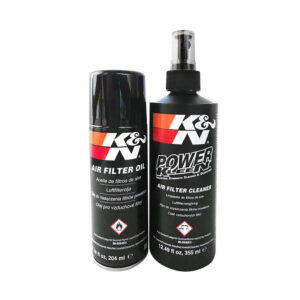
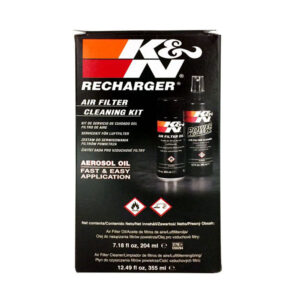
You need the K&N cleaner and oil, a soft brush and a tap or hose with a gentle flow. K&N describes this procedure as the only approved way to maintain its filters.
So do not use petrol, solvents, degreasers or any other oil. The K&N air filter cleaning kit contains a cleaning spray and filter oil. The other maintenance products are in the K&N maintenance.
How do you clean a K&N filter step by step?
The process takes time because of the natural drying, so plan it for a day when the car can stand. Follow the steps in this order.
- Remove the filter and carefully brush off the coarse dirt with a soft brush.
- Spray the cleaner liberally on both sides of the filter.
- Leave it for 10 minutes to loosen the dirt. Do not let the cleaner dry on the filter.
- Rinse the filter with cool, low-pressure water from the clean side out, so the dirt is flushed outwards.
- Keep rinsing until no trace of cleaner remains.
- Gently shake off the excess water and let the filter dry naturally.
- When it is completely dry, spray oil evenly along the crown of each pleat, holding the nozzle about 8 cm away.
- Let the oil wick in for about 20 minutes.
- Add oil to any light areas on both sides until the whole filter is an even red.
- Refit the filter in its housing and check that the seal sits tightly.
What are the common mistakes?
Most problems come from rushing: drying with air, oiling a wet filter or rinsing from the wrong side.
- Drying with compressed air. The Swedish text of the K&N instructions explicitly forbids it. Let the filter dry on its own.
- Oiling a wet filter. The same instructions say to apply oil only once the filter is completely dry.
- Rinsing from the dirty side or with a strong jet. The water should be cool, at low pressure and flow from the clean side out.
- Dried cleaner. The cleaner works for 10 minutes and must not dry on the filter.
- Uneven oil. The aim is an even red colour, so add oil only to the light areas.
- Another cleaner or oil. K&N approves only its own procedure with the K&N cleaner and K&N oil.
Note the date and mileage at each cleaning, for example on a sticker under the bonnet. That way you will know when the next one is due.
How do you find a K&N filter for your car?
Search by model and engine or by the part number of the old filter. The titles and descriptions of the filters in the shop give the car, the engine and the part number, for example 33-2177-1.
Universal cone filters are not made for a specific car. With these you match the flange diameter, for example 102 mm, to the inlet of your air system. All filters are in the K&N filters for cars.
How do you clean a K&N cabin filter?
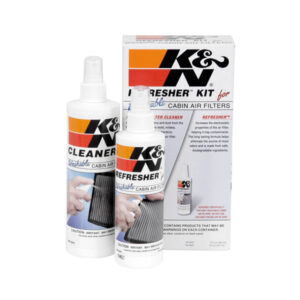
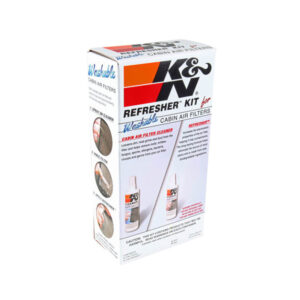
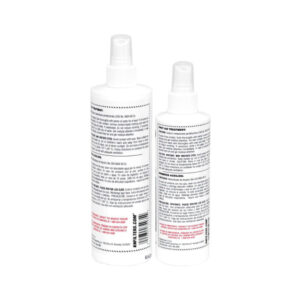
Washable K&N cabin filters have a separate cleaning kit. Do not use the engine air filter kit on them.
According to the manufacturer's description, the K&N cabin filter cleaning kit removes mud and road dirt and restores the filter's electrostatic properties so that it traps contaminants again. Follow the instructions on the packaging.
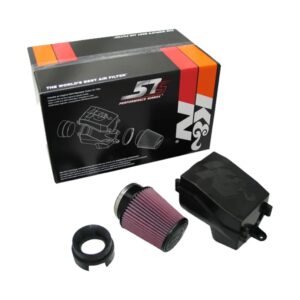
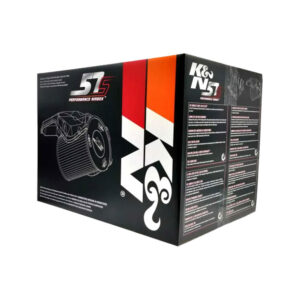
If you want to replace the whole air intake, see also the K&N airflow improvement kit 57S-9500. Before ordering, check the number against the K&N catalogue for your car.
Sources
Frequently asked questions
How often should a K&N filter be cleaned?
K&N states that most of its air filters are cleaned every 75,000 km. On dusty roads check the filter earlier and clean it when the pleats are thickly covered in dust.
Can a K&N filter be washed with water only?
No. Water only rinses the cleaner away: the dirt is loosened by the K&N cleaner, and after drying the filter must be re-oiled.
Can I use another cleaner or engine oil?
K&N describes its procedure as the only approved way to maintain its filters. Use the K&N cleaner and oil, not petrol, solvents or engine oil.
How long does a K&N filter take to dry?
The instructions give no exact time; they require the filter to dry naturally and completely before oiling. Do not dry it with compressed air.
How much oil goes on a K&N filter?
The oil is sprayed evenly along the crown of each pleat from about 8 cm, left to wick in for 20 minutes and added only to the light areas. The aim is an even red colour across the whole filter.
Is a K&N worth it over a paper filter?
A K&N is reusable but needs cleaning and oiling. A paper filter is not cleaned but replaced with a new one according to the car's service schedule.
 Mandatory car equipment in Bulgaria in 2026: the law and fines
 Parking space dimensions in Bulgaria: width, length and aisle
 Garage wall protector strip: size and height