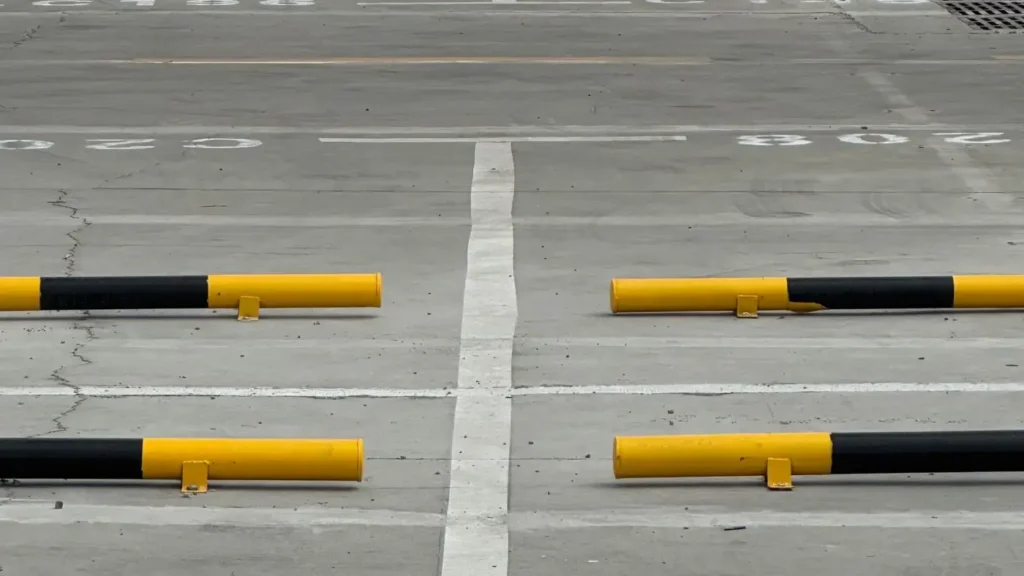
Parking equipment does six jobs: stopping in exactly the right place (wheel stop), slowing traffic down (rubber speed bump), keeping your space free (post or barrier), protecting walls and doors (protective strip or edge), laying out spaces without paint (dividers, arrows, marker posts) and closing off an area for a while (cones). Choose the item by the problem. Under the regulation a space at 90° is 2.40 × 5.00 m.
What is your problem?
Start from what happens in your space. The table links the problem to the solution and to the sizes available in the shop.
| Problem | Solution | Sizes in the shop |
|---|---|---|
| The car stops too close to the wall or kerb | Parking wheel stop | 55, 100 and 165 cm |
| Cars drive fast through the yard or car park | Rubber speed bump | Module 100 × 35 × 5 cm and end caps |
| Other people park in your space | Locking parking post or barrier | Post 60 and 80 cm, barrier 62 × 34 cm |
| The door hits the wall or column | Protective strip or rubber edge | Strips S, M and L, edges 60 and 80 cm |
| The spaces are not marked or the lines cannot be seen | Dividers, arrows, marker posts | Divider 90 cm, arrow 100 cm, posts 45 and 75 cm |
| You need to close off an area for a while | Cones and a sign | Cones 50 and 70 cm, ‘Wet floor’ sign |
If you need several items at once, see the example sets at the end of the article.
In what order should you equip a new space?
Start with measurements and rights, and choose the products last. That way you do not buy something you have nowhere or no right to put.
- Measure the space: width, length, aisle, walls and columns at the sides.
- Check whose space it is: your own property, the shared yard of a block of flats or a municipal street.
- Decide where the tyres should stop and fit a wheel stop.
- Protect the wall or column where the doors open.
- Mark out the spaces and the direction with paint or with dividers and arrows.
- If you have the right to lock the space, fit a post or barrier.
- If cars come in fast, add a rubber speed bump in the drive.
Most items are fixed to the ground. Before drilling, check that there are no cables or pipes under the spot.
How do you stop in exactly the right place?
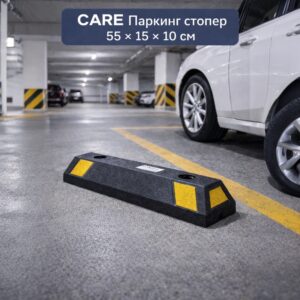
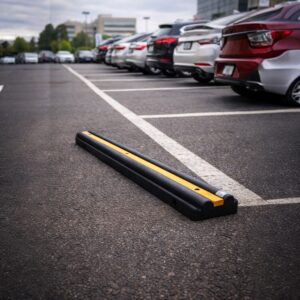
With a parking wheel stop. It stops the tyre before the bumper reaches the wall, and the car stops in the same place every time.
- Wheel stop 55 × 15 × 10 cm – one in front of each tyre, two per car. It suits garages, car parks and private yards.
- Wheel stop 100 × 16 × 5 cm – only 5 cm high, for a car with a low bumper; one in front of each tyre.
- Wheel stop 165 × 15 × 10 cm – one per space, across most of its width.
Bulgaria has no rule for the distance between a wheel stop and the wall. Work it out from your own car: how far the bumper sticks out in front of the tyre, plus 10–20 cm to spare. The method and fixing on concrete, asphalt and paving are described in the article on parking wheel stops.
How do you slow traffic down in a yard or car park?
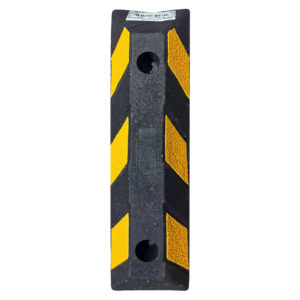
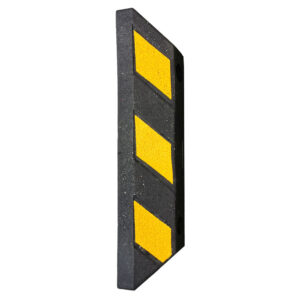
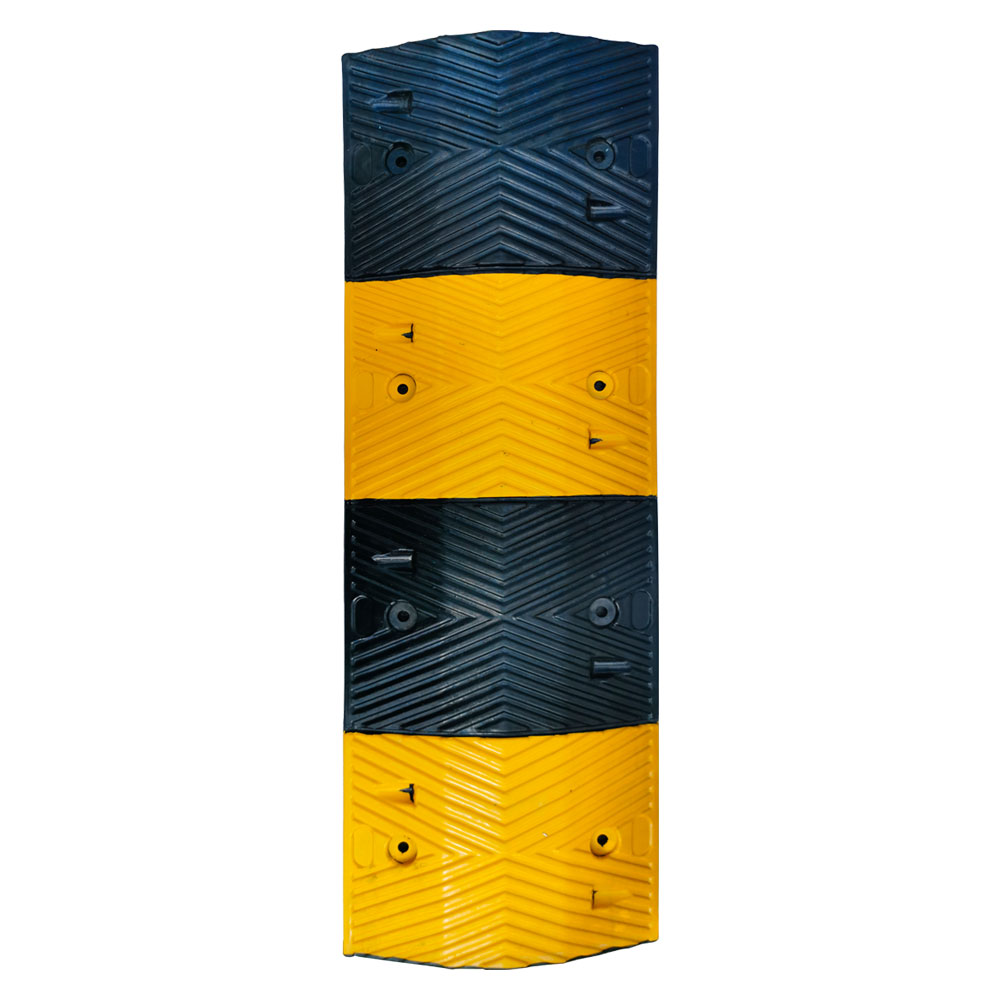
With a rubber speed bump, known in Bulgaria as a ‘sleeping policeman’. It is assembled from modules, so it covers the exact width of the drive.
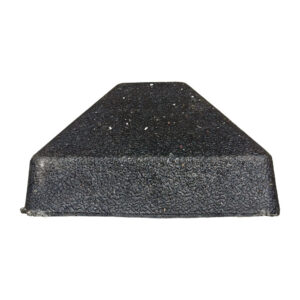
A 5 cm rubber module slows traffic to about 16–30 km/h, according to data from different makers. The module in the shop is 100 × 35 × 5 cm, made of rubber with an anti-slip surface, and is fixed with anchor bolts. The ends are closed with SH-R03 end caps (35 × 5 × 17 cm), black or yellow. For one lane you need one module per metre of width and two caps.
On a public street you cannot put a bump down yourself: it is installed by decision of the road owner (for streets, the municipality) and to a design approved by the competent authorities. Since 15.10.2024 this is Ordinance No. RD-02-21-1 of 1 October 2024, which repealed Ordinance No. RD-02-20-10 of 2012. In a private yard, a company car park or a warehouse the owner decides. Height, speed and installation are in the article rubber speed bumps.
How do you keep your parking space free?
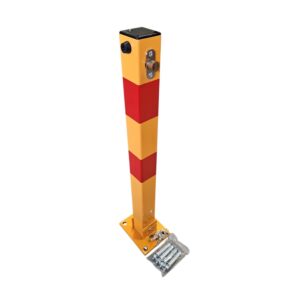
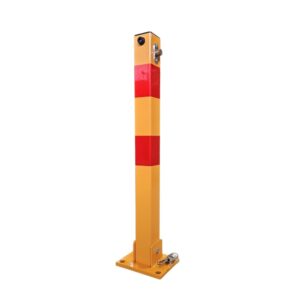
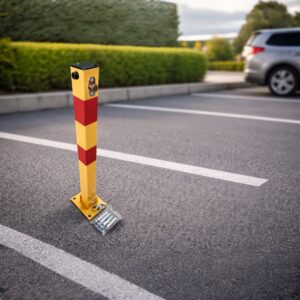
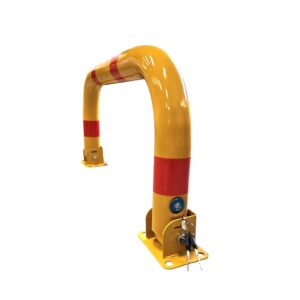
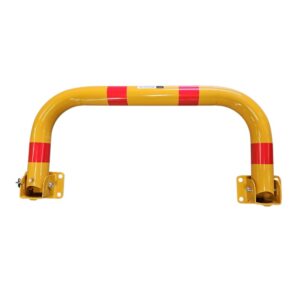
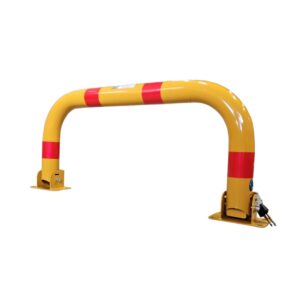
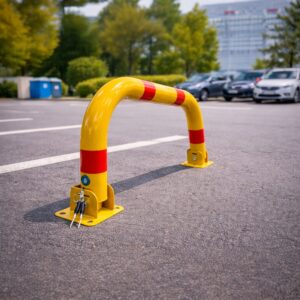
With a locking parking post or parking barrier. Raised, they stop another car from pulling in; lowered, they let yours through.
- Parking post 60 cm – metal, with a built-in lock, no separate padlock needed.
- Parking post 80 cm – metal, taller and easier to see, locked with a padlock that comes in the set.
- Parking barrier 62 × 34 cm – a metal frame with a built-in lock that blocks the width of the space.
Which of the three suits which space is covered in the comparison parking post or parking barrier. Before you buy, check that you have the right to lock the space. In the shared yard of a block of flats this depends on a decision of the general meeting, and on a municipal street it is not allowed. In detail: can you put a post or barrier outside a block of flats.

How do you protect walls, columns and doors in a garage?
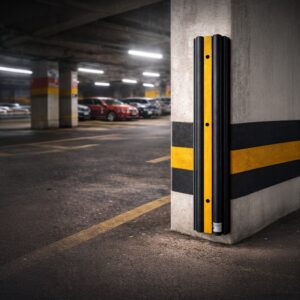
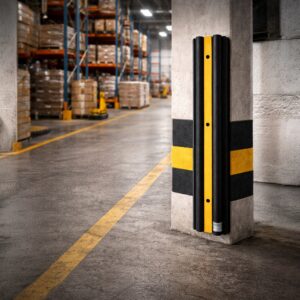
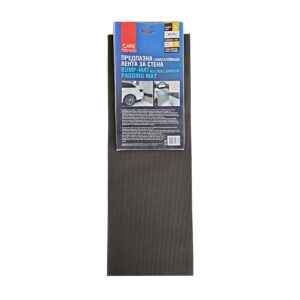
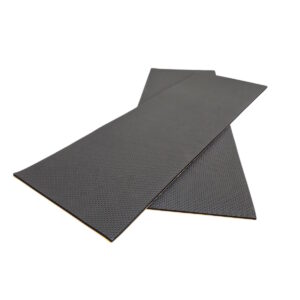
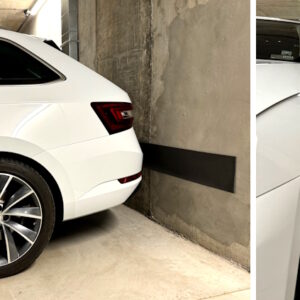
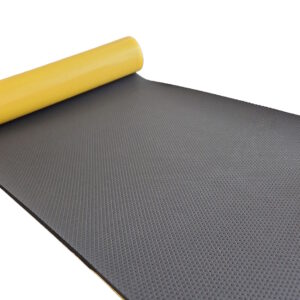
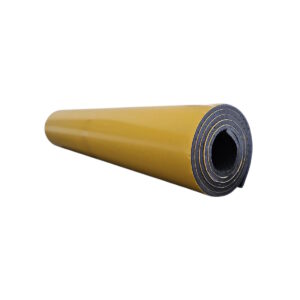
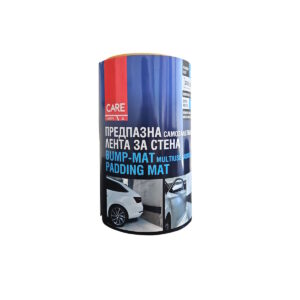
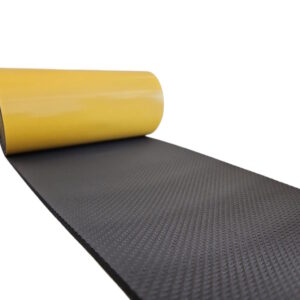
With a soft protective strip on the wall and a rubber edge on columns and corners. They take the knock from the door or bumper before it reaches the concrete.
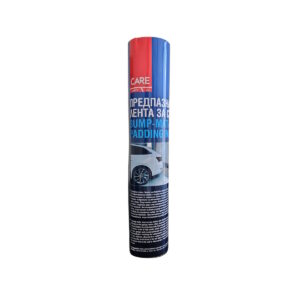
A single-car garage under the regulation is at least 2.75 m wide, so little room is left beside the car to open the door. The strips in the shop are self-adhesive, waterproof and cut to size:
| Size | Size as described | Where |
|---|---|---|
| S | 60 × 20 cm | One spot where the door edge touches the wall |
| M | 40 × 100 cm | A wide zone for doors at different heights |
| L | 20 × 200 cm | A long strip along the wall |
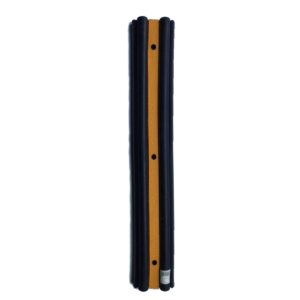
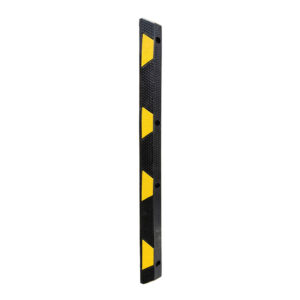
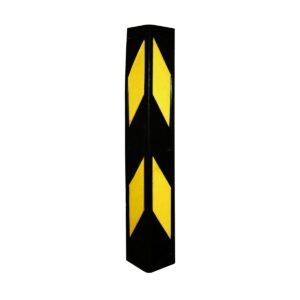
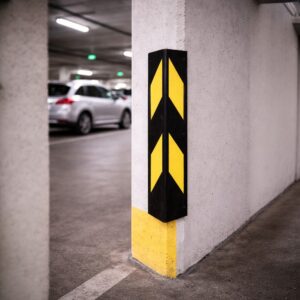
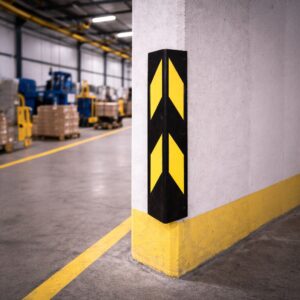
The rubber edge is 60 or 80 cm long and protects columns and corners at the entrance. The 60 cm model is black with yellow warning stripes. If you want protection on the car side, there are also LAMPA door edge protectors, 4 pcs.
The strip goes where the edge of the open door touches the wall. How to find that height is described in the article protective strip for a garage wall.

How do you lay out spaces and traffic without paint?
With lane dividers, direction arrows and flexible marker posts. They mark out spaces and direction without painting, and stay visible when the lines have faded.
- Lane divider 90 × 20 × 9 cm with a 70 cm post – for the boundary between two spaces or at the head of the line.
- Direction arrow 100 × 20 × 1 cm – at the entrance, the exit and the turns of the aisle.
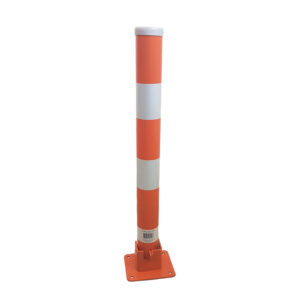
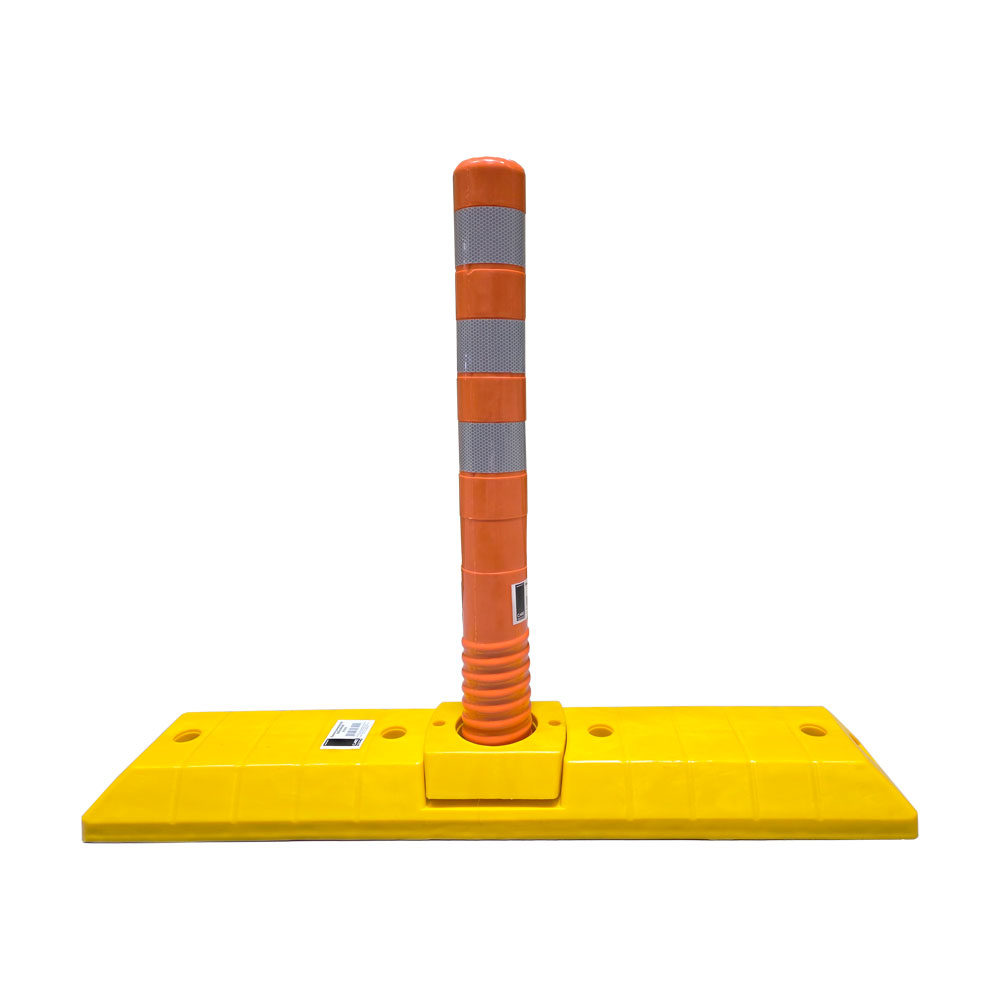
- Polyurethane marker post 75 cm – springs back upright after an impact and has reflective bands; for the edge of a pedestrian area or an entrance.
- Marker post 45 cm – lower and light to carry.
If you paint, parking space lines are white and 10 cm wide. A yard plan, quantities and an example with 4 spaces are in the article how to mark parking spaces.
When do you need cones and signs?
When you close off an area for a short time: repairs, loading, cleaning, a wet floor. A cone needs no fixing and is easy to move.
For works on roads and streets, Ordinance No. 3 of 2010 requires cones made of flexible material, red or orange, with retroreflective bands. The height depends on the road:
| Cone height | Where, under Ordinance No. 3 of 2010 |
|---|---|
| 30 cm | Secondary streets and local roads |
| 50–55 cm | Main streets of class III and IV, roads of class II and III |
| 70–75 cm | Motorways, class I roads, urban expressways |
The shop has a 50 cm cone, 70 cm cone and 70 cm cone with a heavy base for places with wind and traffic. For indoor areas there is a folding ‘Wet floor’ sign with the text on both sides. Which size suits the boot, the yard or the warehouse is in the article traffic cone sizes.
A cone is not required in a private car. Under the Road Traffic Act a car must carry a warning triangle, a first aid kit, a reflective vest and a fire extinguisher; details in the article mandatory car equipment.
What size should a parking space be?
A car parking space at 90° is 2.40 m wide and 5.00 m long, or 4.50 m if the front of the car overhangs a kerb. The aisle in front of it is 6.00 m. The sizes come from Annex 24 to Ordinance No. 2 of 2001 on road marking.
- Next to a wall or a kerb higher than 0.15 m on one side the width is at least 2.85 m, on both sides at least 2.90 m.
- A space for disabled drivers is 3.60 m wide.
- A single-car garage is at least 2.75 × 5.50 m inside.
The full table by angle and its notes are in the article parking space dimensions.
What do the rules say, in short?
The rules depend on whose space it is. The ordinances on road marking and on speed bumps apply to roads and streets open to public use.
- Your own property: the road ordinances do not apply directly and the owner decides. Their sizes are a useful reference.
- A yard or garage in a block of flats: under the Condominium Management Act owners may not take over common parts (Art. 6), and the general meeting decides how the common parts and the adjoining area are used (Art. 11).
- A municipal street or pavement: you cannot reserve a space or put up a barrier yourself. In Sofia the city council ordinance forbids such devices and they are removed without warning (Art. 51 and 52).
- A public car park of a building: the number and size of spaces for disabled drivers are set in the accessible environment ordinance.
This is a short summary. Other municipalities' ordinances cover the same matters, but with different texts and procedures. For a specific yard or street, check the current version of the act and your municipality's ordinance.
What do you need for a garage, a space outside a house and a yard?
Here are example combinations. The quantities are for the typical case; adjust them to your space.
| Space | What to get |
|---|---|
| Single-car garage | 2 wheel stops 55 cm (or 2 of 100 cm for a low bumper); strip M or L on the wall on the driver's side; 60 cm edge on the corner of the entrance |
| Open space outside a house | Parking post 60 or 80 cm or barrier 62 × 34 cm; 1 wheel stop 165 cm |
| Yard with 4 spaces at 90° | 4 wheel stops 165 cm; 5 dividers with post; 2 arrows; 2 posts 75 cm |
| Company car park with a drive | Rubber speed bump (a module for every metre of width and 2 caps); arrows; 70 cm cones with a heavy base |
All products in this article are in the category Parking elements.
Sources
- Ordinance No. 2 of 17.01.2001 on road signalling with road markings, Art. 1, 32 and Annex 24
- Ordinance No. RD-02-20-2 of 20.12.2017 on planning and design of the transport system of urbanised areas, Art. 42
- Ordinance No. RD-02-20-10 of 5 July 2012 on speed bumps, repealed from 15.10.2024 by Ordinance No. RD-02-21-1 of 1 October 2024 (State Gazette No. 87 of 2024)
- Condominium Management Act, Art. 6 and Art. 11
- Ordinance on traffic organisation in Sofia Municipality, Art. 51 and 52
- Ordinance No. 3 of 16.08.2010 on temporary traffic organisation and safety during construction and installation works on roads and streets, Art. 13
Frequently asked questions
Which parking equipment do I need for one space in a garage?
Usually two 55 cm wheel stops (or two 100 cm ones for a low bumper) and a protective strip on the wall on the driver's door side. If there is a corner or column at the entrance, add a rubber edge.
Do I need a permit for parking equipment in my yard?
In your own yard the owner decides. In a shared yard or garage of a block of flats the general meeting decides how the common parts are used, so get a decision first. On a municipal street or pavement you cannot put up barriers yourself.
Can I install parking equipment myself?
Yes. The strips are self-adhesive and need no tools. Wheel stops, speed bumps, posts and barriers are fixed to the ground, usually with a drill and anchors, so check in the description whether the fixings are included.
Does parking equipment stand up to winter and sun?
The outdoor products are described as weather-resistant, and some are explicitly stated to be UV-resistant. After winter, check the fixing of everything mounted on the ground.
Can I reserve a space on the street with a cone?
No. On a municipal street you cannot reserve a space with any object yourself, and in Sofia the municipal ordinance forbids such barriers and they are removed without warning.
This article is information, not legal advice.
 Parking bollard or parking barrier: which to choose
 Parking wheel stop: size, distance from the wall, fitting
 Traffic cone 30, 50 or 70 cm: which size you need